Do you often work for 10 hours a day standing on a concrete factory floor, as in Oragadam Industrial Corridor?
You may know this pain well. It all starts like a jab on the heel when you start to get up in the morning. But by the end of the shift it would ache and hurt when you lift your feet and take steps.
When the trouble begins as a little nuisance, soon you may have a hell of a time doing your daily tasks.
The industrial workers from Renault-Nissan, Daimler India, Apollo Tyres and other large manufacturers who spend long hours of their day standing have heel pain due to their nature of work.
Fortunately there are non-surgical treatments available.
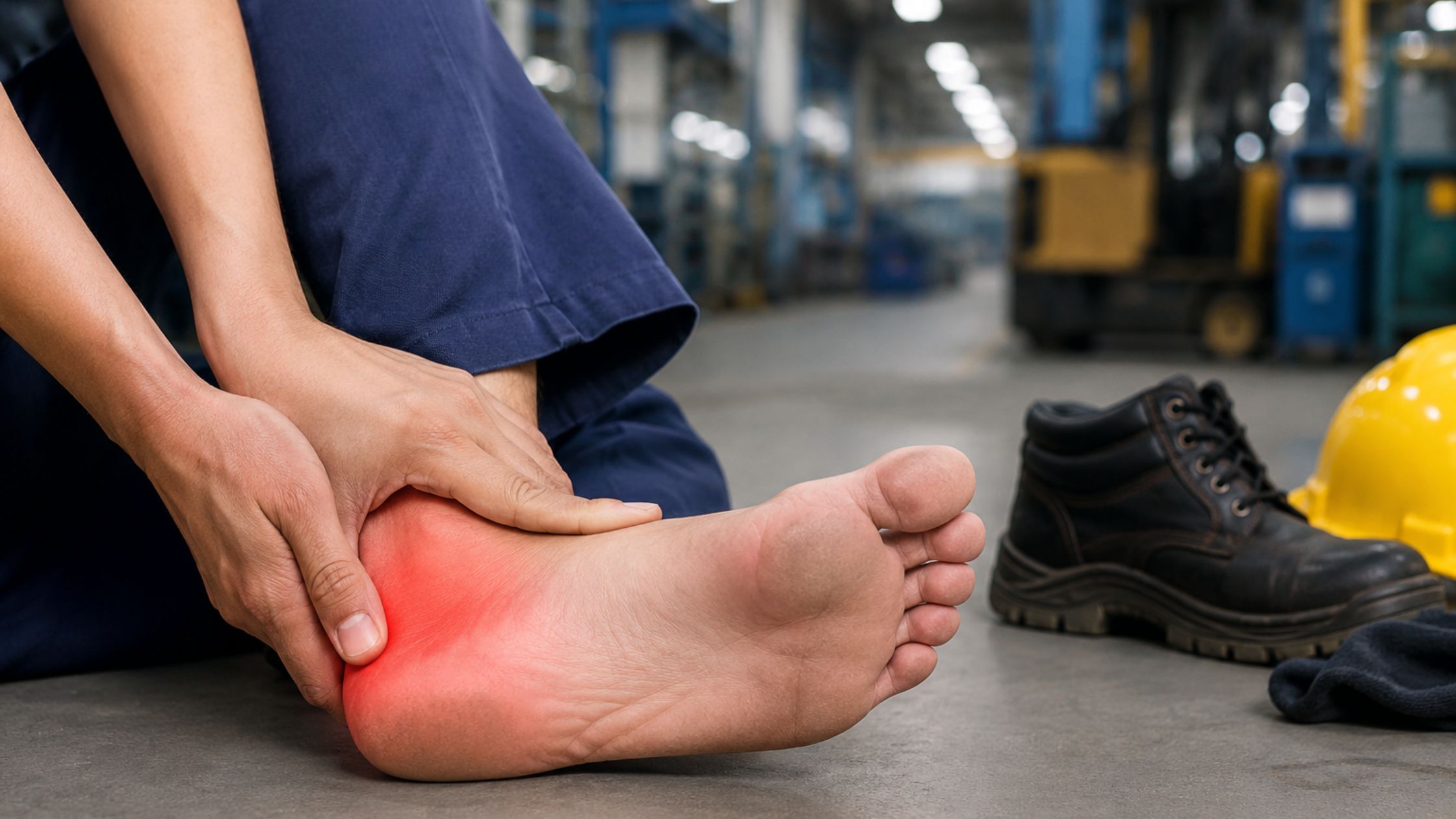
Why Factory Floor Workers Suffer From Heel Pain So Much
Factory workers spend long hours standing, lifting and walking, which may also involve pushing or pulling heavy loads across large areas in a manufacturing facility on a concrete surface. While an office worker may often change their posture from sitting to standing, factory workers remain on their feet for as much as 8 to 12 hours a day.
Long standing, and constant impact from the hard surface cause chronic pressure on the plantar fascia-the tough band of tissue that runs under the foot, from heel to the toes. This eventually leads to wear and tear in the plantar fascia that causes it to develop inflammation and pain.
Other risk factors are:
Standing for many hours at a time
Working in a hard environment
Repeated lifting and carrying heavy loads
Ill fitting safety shoes
Excess body weight
Tight calf muscles
Pain worse in the first steps after standing for a while or getting up from sleep, is a tell tale sign of plantar fasciitis.
What Exactly Happens Inside Your Heel?
When the plantar fascia-which is actually a strong ligament, that supports the arch of your foot, and connects your heel bone to your toes - is subjected to repeated stress and trauma over a period of time, it gets aggravated. In fact, small injuries in the ligament get built up since you spend hours on your feet at the workplace and it never gets enough time to heal.
The symptoms include:
Sharp pain on the bottom of your heel
The first few steps in the morning may be painful
After long hours of standing, your heel will pain
Discomfort after your shift is over
You may also experience tenderness on the heel when you press on the bottom of it
People may dismiss this as simply having a “heel pain”, but knowing the actual cause helps in proper treatment.
Why Resting Doesn’t Help for a 10-Hour Shift
One of the challenges for industrial workers is that they are almost unable to get complete rest from the pressure on their feet throughout the day. Even if your pain may improve temporarily after a weekend rest, the moment you get back to your routine, the pain reappears.
This repetitive stress on the plantar fascia makes healing of the injury extremely difficult and in some cases, may lead to chronic heel pain.
Therefore, your doctor will likely prescribe more than just rest and pain pills. Treatment options could include activity modification, if possible stretching and flexibility exercises, physiotherapy, supportive footwear, heel cups, or Image guided PRP therapy for selected cases. Early treatment could significantly prevent long-term pain and disability.
Can you get back to work soon after your heel pain treatment with PRP?
If OTC, physical therapy or custom insoles have failed to reduce the agony from heel pain, you may be an appropriate candidate for platelet-rich plasma (PRP) therapy - once you've met with your doctor for an assessment.
What is PRP therapy?
Platelet-rich plasma (PRP) therapy is a blood treatment that uses your blood, concentrated platelets and blood components and reinjects them into a targeted part of your body.
When used to treat heel pain, PRP therapy can have some major benefits:
It reduces pain in the heel.
You’ll experience a pain-free life.
Plantar Fascia is strengthened.
Serious surgery will be avoided.
For a factory worker on their feet all day, this missing work is a huge disruption.
Good thing for a factory worker with heel pain, PRP therapy could work quickly. This quick and minimally invasive procedure can last between 30 to 40 minutes and factory workers may be back to their job duties and normal shift the very next day.
Typically, factory workers can return to work within approximately two weeks following a PRP procedure.
Your physician will collaborate with you to design an individualized plan that returns you to your work shift as quickly as possible.
Best Tips for Factory Workers to Help Manage Workplace Heel Pain
Following any treatment and going back to work with these strategies will result in a faster recovery.
Ensure you are wearing shoes that will protect and support the arch of your foot.
Change footwear frequently as soon as it starts to show signs of wear, and supplement that, as per your doctor's recommendations, with an arch support or a heel cup.
Stretch your calf muscles both before and after the work day.
You may benefit from an anti-fatigue mat at work if you stand in place for extended periods.
Losing excess weight, if obese, will reduce the strain placed on your heel.
Making these simple adjustments both at home and on the job will relieve some pressure on the plantar fascia.
Our Hours Work for Your Schedule
After evaluating your condition, our physician may consider offering a PRP treatment as part of an effective therapy plan. Located centrally, our conveniently located clinic accommodates a variety of work schedules.
Clinic Location
1/164, GST Road,Singaperumal Koil,Tamil Nadu 603204
Click here to learn more about our Oragadam facility.
FAQs
What is the nearest heel pain specialist to Oragadam?
We're located just a short 20- to 25-minute drive from Oragadam in Singaperumal Koil. We at Dr. RRB Pain Care specialize in providing efficient and non-surgical heel pain relief options for our patients.
How soon after PRP treatment can I return to my work?
You should be able to resume normal activities on the day after your PRP for heel pain procedure.
However, our physician may recommend two weeks of reduced activity before a worker may return to their previous duties.
How long will it take to cure my heel pain?
After an initial evaluation, we set up an appointment. Depending on the severity of your case, you may find relief from heel pain in as little as 30 to 40 minutes with a PRP therapy session.
What are the best shoes for factory workers with heel pain?
It's crucial to select safety shoes that provide adequate support for the arches and cushioning for the heels.
We advise you to also add a heel cup and consider an anti-fatigue mat to cushion your feet during long standing shifts.
Conclusion
No matter if you lift, walk, or stand, heel pain should not hinder your workday or your life.
Dr. RRB Pain Care offers a variety of effective non-surgical treatments, such as PRP therapy, to relieve heel pain.
Contact us to schedule your heel pain consultation if you live in the Oragadam area.
Dr. RRB Pain Care, Singaperumal Koil. Send us a message on WhatsApp, or make an appointment Today