The condition can affect joint tenderness, tendon injuries and sports injuries and impact your daily life and lifestyle. A lot of patients these days have heard about Platelet-Rich Plasma (PRP) therapy via social media or from friends, but they may have questions on how it works and if it is a suitable option for them.
Dr. RajaRajan Balasubramanian FIPP, DABRM is the 1st Dual Board Certified Pain Physician & Pain Psychologist in India at Dr. RRB Pain Care, Singaperumal Koil. Patients can benefit from his knowledge of the regenerative therapies and receive a personalized treatment according to their condition, guided by ultrasound.
When looking for PRP therapy near Singaperumal Koil, it is crucial to understand that PRP isn't a medication or an artificial substance. High in platelets and growth factors, this blood used for healing a patient's wound is available in small quantities.
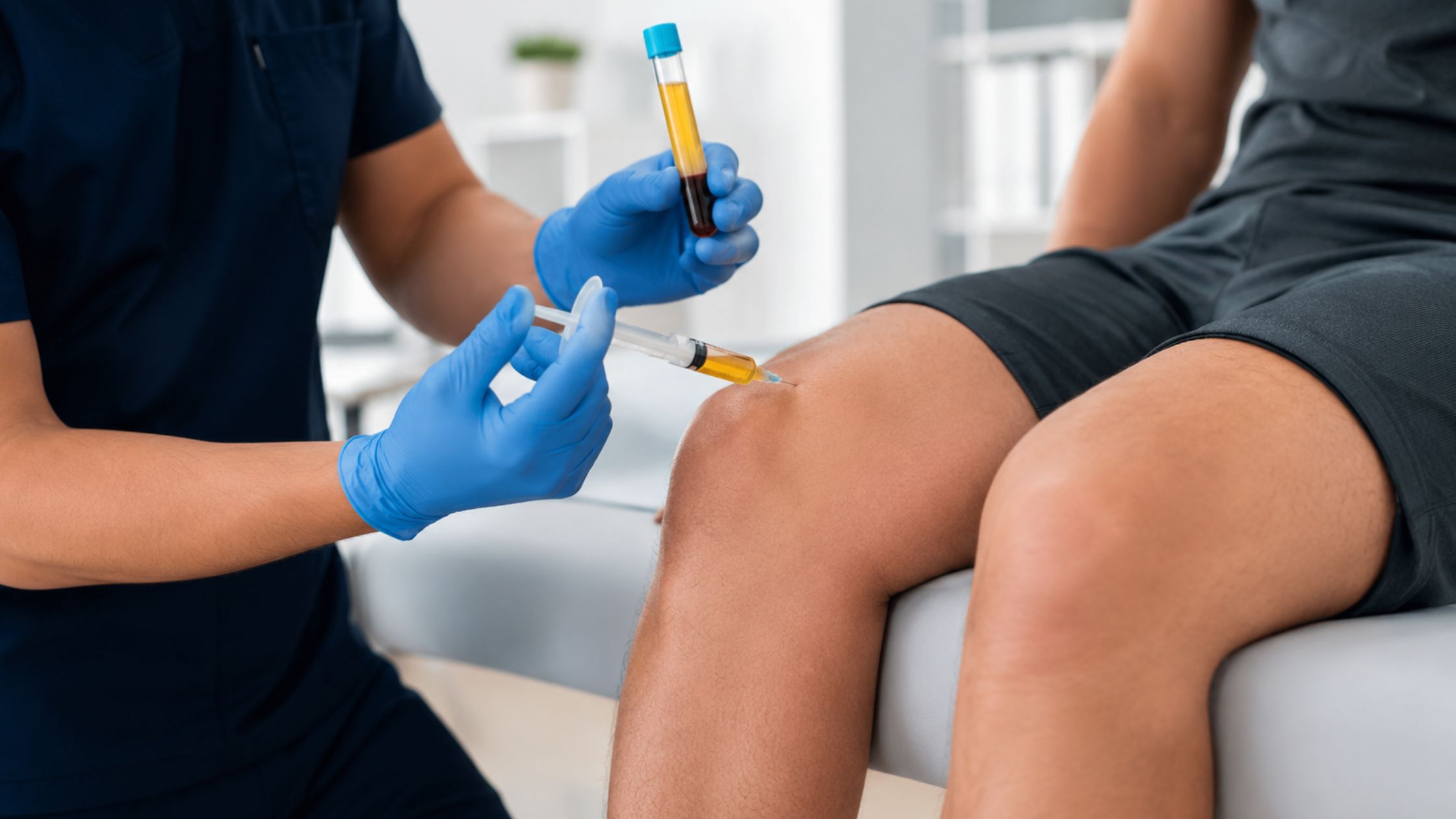
What's PRP - In Plain English
PRP is an acronym for Platelet-Rich Plasma.
Platelets are small blood cells which assist in preventing bleeding after an injury. More importantly, they also emit growth factors, natural proteins that aid in tissue repair and healing.
The procedure in PRP therapy involves taking the blood from you and isolating the platelets. The PRP is then applied to the damaged site under the guidance of ultrasound for accuracy.
PRP is not intended to relieve pain but to make the body heal itself; it will increase the concentration of healing cells at the injury site.
The PRP is prepared in a 4-step process, from extraction to injection.
The PRP procedure is done with your own blood and involves four simple steps.
Step 1: Blood Collection
Your blood is taken from your arm, like a regular blood test.
Step 2: Centrifugation
A special high speed centrifuge is used for the addition of the blood sample. This process causes the blood to be divided into layers according to their density.
Step 3: Platelet Concentration
The PRP is meticulously collected. The part that is generated is richer in platelets and growth factors than normal blood.
Step 4: Ultrasound-Guided Injection
Targeting the correct location, the PRP is delivered by ultrasound into the correct tendon, ligament, joint or soft tissue.
Most patients can go home on the same day and the whole process can take place in one outpatient visit.
How PRP works in the body – Growth Factors simplified.
One of the most frequently asked questions by patients is:
What is it that PRP treats for joint pain?
It is your own, natural healing power, which is available through the platelets.
Platelets travel to the area where there has been an injury and release growth factors to help control the healing response of the body. These growth factors promote tissue repair by stimulating the activity of cells in tissue repair.
PRP is an enriched concentration of your body's own healing ingredients where they are needed.
PRP is not meant to treat the symptoms, but to help to heal the damaged tissues. Since it is made in your own blood, there's little likelihood of an allergic response.
Make sure that PRP is not an immediate pain-killer injection. It takes time to heal and improvement may be seen over the next couple of weeks as the body heals.
Who would be a suitable person to receive PRP?
PRP is not an appropriate treatment for all conditions, however, it can be used in certain musculoskeletal conditions following a comprehensive clinical assessment. The diagnosis, severity of the condition and overall health status of the patient are taken into consideration.
Knee Osteoarthritis
PRP may be used in conjunction with other treatments and modalities, and may be beneficial to patients who have early to moderate Knee Osteoarthritis. The aim is to maintain joint function, minimize pain and disability and avoid more invasive procedures if possible.
Plantar Fasciitis
Persistent Plantar Fasciitis that has failed to benefit with stretching, the right shoe or physiotherapy may be considered for PRP treatment. The injection is placed with the help of ultrasound guidance ensuring accurate placement.
Rotator Cuff Injuries
In some cases of Rotator Cuff Tear, as well as in chronic cases where tendon degeneration is present, PRP might be helpful. The size of the tear and condition of the tendon will determine treatment.
Disc-Related Back Pain
Regenerative therapy can be a part of a patient's individual pain management plan for those who have selected DR-LBP. A thorough evaluation is crucial prior to recommending PRP.
Tennis Elbow
PRP may have a value for chronic Tennis Elbow (lateral epicondylitis) which has not responded to conservative treatments. The aim is for the tendon to heal, not to reduce symptoms.
Achilles Tendinopathy
If appropriate, PRP may be beneficial for chronic Achilles Tendinopathy. As a general rule, a structured rehabilitation program is suggested in addition to the treatment for best results.
The real difference between PRP and Steroid Injection.
Patients often ask if it is better to undergo a PRP or a steroid injection. This will vary with the underlying disease and the treatment goals.
One frequently asked question is “PRP or steroid injection for pain?
A short-term pain relief can be achieved in a short period of time with steroid injections, which help to lessen inflammation. Unlike PRP, which aims to oppose your body's healing processes, PRP tries to use growth factors in the blood to assist with the body's natural healing process. Depending on your diagnosis and treatment goals, your doctor will recommend the treatment that's best for you.
Dr. RRB Pain Care in Singaperumal Koil offers ultrasound-guided PRP therapy after a thorough clinical evaluation to determine whether the treatment is appropriate for your condition.
If you are seeking PRP therapy near Singaperumal Koil, Dr. RRB Pain Care will offer you ultrasound guided PRP treatment after a thorough clinical examination.
Patients come for regenerative medicine consultations from Tambaram, Kattankulathur, Oragadam and from the corridor of GST Road regularly.
Approximate travel times:
Tambaram: 25–30 minutes
Kattankulathur: 10–15 minutes
Oragadam: 20–25 minutes
Clinic Address
GST Road is situated in Singaperumal Koil, Tamil Nadu 603204, India.
A proper diagnosis at our Singaperumal Koil clinic is the first step in determining whether PRP therapy is right for you.
Give us a call today on our mobile phones for a consultation.
Frequently Asked Questions
1.But, is PRP therapy safe?
Yes. There is very little risk of allergies to PRP, since it is your own blood. Always done following a thorough medical examination and under sterile conditions.
2.How much does it take for PRP to take effect?
The majority of patients do not get their symptoms better right away. The healing process occurs over a few weeks as the body's healing processes take over.
3.Can PRP be a better alternative to a steroid injection?
This will depend on the condition that is being treated. Steroid injections are used to alleviate inflammation and PRP is used to help heal tissue. Depending on your diagnosis, your doctor will tell you which treatment will be most appropriate for you.
4.How many times will I have to have a PRP procedure?
The number of sessions will vary depending on the condition, severity and response to the treatment. Some patients may require only one treatment, others may require additional treatments.
5.Which clinics are located around Kattankulathur where I can get PRP therapy?
Dr. RRB Pain Care at Singaperumal Koil will assess if PRP is suitable for the patient's condition and the patient can visit the clinic from Kattankulathur, Tambaram, Oragadam and surrounding areas.
Conclusion
PRP therapy is a regenerative treatment that isn't based on just medication. It has a limited application and is not appropriate for all patients, but may be a good option for specific patient groups as part of a comprehensive pain management strategy.
Proper diagnosis is the initial step in PRP therapy in Singaperumal Koil, where the doctor will make sure that PRP therapy is an appropriate treatment for your condition.
If you want to know whether you can use PRP, then you can find out here.
Dr. RRB Pain Care at Singaperumal Koil is situated within 10 minutes from Kattankulathur and 25 minutes from Tambaram and they will undertake a detailed evaluation, which includes ultrasound guided diagnosis.
Give us a call or make an appointment.